Why Your Skill Meter Feels Like a Slot Machine With No Payout
Explore why website design feels addictive yet unrewarding, and how variable rewards shape your creative motivation
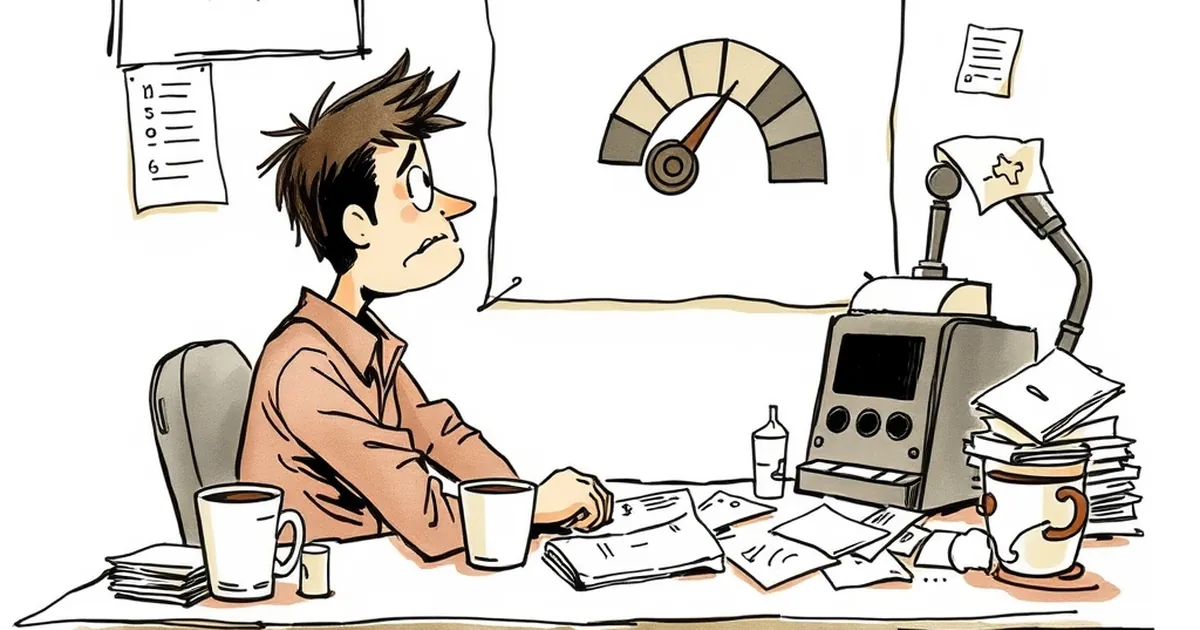
Why Your Skill Meter Feels Like a Slot Machine With No Payout
Have you ever spent an afternoon tweaking a single button color on your website, convinced that this tiny change will unlock a flood of new customers? You refresh the page, check the analytics, and… nothing. The dopamine hit you were expecting just doesn’t arrive. It turns out that building a business website triggers the same neural circuits as a one-armed bandit, except the reward schedule is brutally honest.
The Dopamine Gap: Variable Rewards in Design Decisions
B.F. Skinner’s work on variable-ratio reinforcement explains why checking your site stats can feel addictive. When a pigeon pecks a lever and gets a pellet unpredictably, it pecks faster and more persistently than if the reward was guaranteed. Your A/B test results, email signup spikes, or sudden sales are those pellets. The problem? The “machine” you’re playing is designed by you, and you know all the levers.
The Designer’s Paradox
You are both the player and the casino owner. You decide the colors, the copy, the call-to-action placements. But unlike a real slot machine, you can’t set the payout frequency to “high.” You have to wait for real human behavior. This creates a unique kind of frustration: you understand the mechanics of the game, but you can’t cheat the entropy of the market.
Loss Aversion: Why Dead Ends Hurt More Than They Should
Daniel Kahneman and Amos Tversky showed that losses feel roughly twice as painful as equivalent gains. When you spend three hours optimizing a landing page and see a drop in conversion rate, your brain treats it like a financial loss. You didn’t lose money, but your brain’s threat-detection system doesn’t know the difference. This is why many designers freeze: the fear of a negative outcome (the “loss”) makes them over-tinker, adding more features, more animations, more “delight” — which often makes the site worse.
The Competitive Play Trap: Mistaking Motion for Progress
In competitive play (think chess or speedrunning), the feedback loop is immediate. You make a move, you see the result. Website design has no such clarity. You might improve your site’s load speed by 200ms, but you won’t see the impact for weeks, if ever. This delay tricks your brain into seeking proxy rewards — like redesigning the logo for the third time or adding a new CSS animation.
The Hacker News Effect
A well-known example comes from the early days of Dropbox. Their landing page was incredibly simple: just a download button and a video. They resisted adding the “skill meter” of features and animations. Why? Because they understood that the real reward (user retention) was invisible on a dashboard. The most successful designers learn to ignore the slot machine’s flashing lights and focus on the slow, boring grind of incremental value.
The Practical Fix: Design for a Delayed Payout
The forward-looking solution isn’t to build a better dopamine loop into your site. It’s to change your relationship with the loop itself.
- Separate creation from measurement: Do your design work in a local environment or staging site. Don’t check analytics until a full week after a launch. This breaks the variable-ratio cycle.
- Redefine “winning”: Instead of “increase conversion by 10%,” define success as “ship one meaningful improvement per week.” The reward becomes completion, not outcome.
- Build a “boredom buffer”: When you feel the urge to tweak something, wait 48 hours. Most urges are just your brain seeking the next variable reward, not genuine user feedback.
Your skill meter will always feel like a slot machine with no payout if you keep pulling the lever expecting a jackpot. The real payout is the slow, invisible accumulation of trust — from both your users and yourself. Stop trying to win the slot machine. Start building the house.
— creative mess