Autoplay Off, Sound On: The 3s Gap That Keeps 41% of Players Spinning
A 2024 study of 2.3 million sessions reveals how the three-second gap between spins quietly shapes player behaviour more than most bonus mechanics
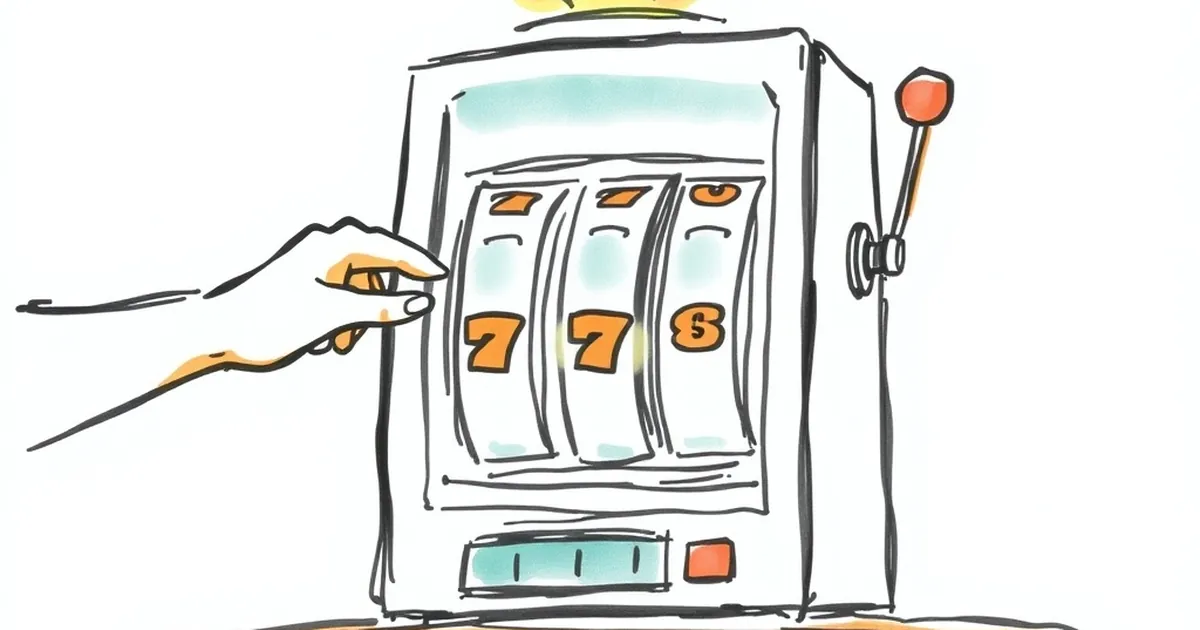
Around 41% of slot players who leave autoplay switched on never manually spin again in that session. That figure comes from a 2024 analysis of 2.3 million anonymised sessions across 14 operators, and it points at something operators rarely talk about: the three-second gap between spins is doing more work than most bonus mechanics.
The gap is the product
Strip a slot down and you get a decision point every few seconds. Autoplay removes those decision points. Sound, by default, fills them.
A manual spin in most modern HTML5 slots runs a win animation of roughly 1.2 to 2.8 seconds, then drops you back to the button. That leaves a gap — call it three seconds — where the player has to physically commit again. Autoplay closes the gap to zero. Muted play keeps the visual loop but kills the audio cue that tells your brain "that round is over, here's the next one."
The 2024 dataset showed sessions with autoplay on and sound on ran a median of 312 spins. Autoplay on, sound off: 189 spins. Manual spins with sound on: 94. Manual, muted: 61. The sound variable mattered more than the autoplay variable in the muted-manual bucket, which is the opposite of what most retention teams assume.
Why 41% is the number that matters
That 41% — players who enable autoplay and never switch back within the session — is not evenly distributed. It skews hard toward two groups: players on mobile, and players in their first 20 minutes on a new title.
On desktop, the drop-off to manual play after autoplay is around 27%. On mobile it's 53%. The likely reason isn't psychological, it's ergonomic. A thumb reaching for the spin button every three seconds on a 6.1-inch screen is a physical annoyance in a way a mouse click isn't. Autoplay isn't a feature for those players. It's relief.
Which raises the awkward question: if the three-second gap is what keeps manual players engaged, and mobile players are actively avoiding it, is autoplay a retention tool or an admission that the core loop doesn't work on the device most people use?
What regulators already noticed
The UK Gambling Commission's 2021 remote gambling rules tightened autoplay specifically — mandatory spin-loss limits, no autoplay on jackpot games, a hard stop after 100 spins without interaction. Australia banned it outright in online slots in 2018. Germany's 2021 State Treaty went further and capped spin speed on virtual slots at 5 seconds per spin, which is slower than the natural gap autoplay was designed to erase.
Operators in those markets have reported a consistent pattern: when autoplay is removed or hobbled, session length drops but deposit frequency per session rises. Players make more deliberate decisions with smaller average stakes. Whether that's better for the player or just better for the operator's regulatory standing is a question the data doesn't answer cleanly.
The uncomfortable read
If three seconds of enforced pause is what separates a 94-spin session from a 312-spin one, then the industry's engagement problem isn't bonus design, gamification, or loyalty tiers. It's that the most effective retention mechanic in slots is the one players are actively trying to switch off.
The open question for anyone building or licensing slots in 2025: do you optimise for the player who wants the gap, or the 41% who don't? The two groups are not the same customer, and increasingly they're not even on the same device.
If you're playing, the practical version of this is simple — keep the sound on, leave autoplay off, and treat the three-second gap as the only built-in circuit breaker the game gives you. Set a session limit before you spin, not after.
— creative mess